About The Song
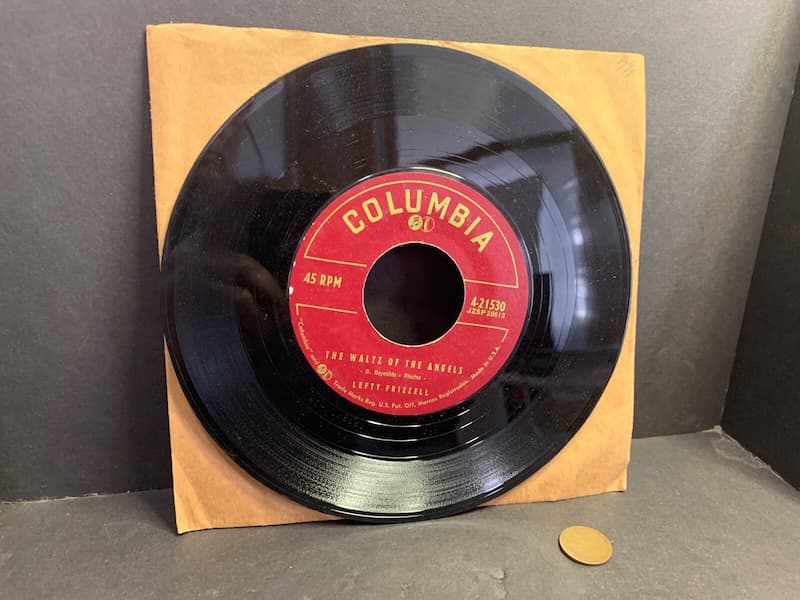
In late May 1956 Lefty Frizzell traveled to Nashville for his first recording session in Music City. On May 22 at Music City Recording Studio on 16th Avenue South, he cut “The Waltz of the Angels,” a gentle waltz-time ballad written by Dick Reynolds and Jack Rhodes. Produced by Don Law, the two-minute-and-forty-one-second track was released by Columbia Records on June 4 under catalog number 4-21530 as the B-side to “Just Can’t Live That Fast (Any More).” It later appeared on various compilations, including the 1967 album *Mom and Dad’s Waltz and Other Great Country Hits*.
The song had already enjoyed success earlier that year. Wynn Stewart recorded the first version in February 1956 for Capitol Records and took it to number fourteen on the Billboard country chart. Lefty, still riding the momentum of his early-1950s hits but now working in a more polished Nashville setting, chose to cover the piece. Reynolds and Rhodes had crafted a romantic number that blended honky-tonk warmth with a touch of heavenly imagery, perfectly suited to the waltz rhythm that was still popular in country music at the time.
At its core “The Waltz of the Angels” describes a man holding his sweetheart and hearing celestial music in her voice and embrace. The verses speak of dancing close while the angels seem to play just for them, turning an ordinary moment of affection into something almost sacred. Lines about lips whispering “I love you” in waltz time and a higher world of love songs written in the sky give the song a poetic, almost gospel-tinged sincerity that sets it apart from pure heartbreak ballads.
Frizzell delivered the performance with the smooth, slightly slurred phrasing and signature vocal slides that had become his trademark. The arrangement featured top Nashville players including Grady Martin on guitar, Jerry Rivers on fiddle, and a steady rhythm section that kept the waltz flowing effortlessly. Don Law’s production kept the sound intimate and warm, allowing Lefty’s conversational style to shine without heavy orchestration. The result felt like a private dance-hall moment captured on record.
Although the single’s A-side received most of the promotion, “The Waltz of the Angels” earned steady airplay on country stations and found a loyal audience among fans who preferred Lefty’s relaxed approach. It never became a major chart hit in its own right but added to Frizzell’s growing catalog of mid-1950s recordings that showed his ability to interpret outside material with deep personal feeling. The track later surfaced on comprehensive box sets such as Bear Family’s *An Article from Life* and various Columbia/Legacy reissues.
Over the decades the song has been recorded by artists including George Jones and Kitty Wells, each version keeping the gentle 3/4 sway alive. Lefty’s take remains one of the most widely heard, thanks to its inclusion on classic-country playlists and tribute albums. It captures a quieter side of his artistry at a time when he was transitioning from Texas dance-hall star to established Nashville veteran.
More than sixty-five years after that Nashville session, “The Waltz of the Angels” stands as a graceful example of Lefty Frizzell’s interpretive skill. What began as a B-side cover of a recent hit became a lasting favorite that showcases his warm vocal delivery and the timeless appeal of a simple love song set to waltz time.
Video
Lyric
The waltz of the Angels I hear each night
I hold you tightly in these arms of mine
It’s surely from heaven this music I hear
When your lips say I love you in waltz time my dear.
There must be a higher world, much higher than ours
A writer of love songs way up in the sky
The maker of roses, of love sweet and true
And the waltz of the Angels the moonlight and you.
— Instrumental —
There must be a higher world, much higher than ours
A writer of love songs way up in the sky
The maker of roses, of love sweet and true
And the waltz of the Angels he wrote just for you…